|
S |
M |
T |
W |
T |
F |
S |
|
|
|
|
|
|
|
1
|
|
2
|
3
|
4
|
5
|
6
|
7
|
8
|
|
9
|
10
|
11
|
12
|
13
|
14
|
15
|
|
16
|
17
|
18
|
19
|
20
|
21
|
22
|
|
23
|
24
|
25
|
26
|
27
|
28
|
29
|
|
30
|
31
|
|
|
|
|
|
|
|
37 members (Jweeks, woodduck, russellb, James, janiemae, CouchNapper, Chad Burnette, Mulcher, desertdog, mcninja, Ron A., MIB, dave260rem!, NoHuntin, ImThere, RareBreed, sanderson, Oscarflytyer, cmontgomery, robinhedd, Longtine, odocoileus, RSF, Uokman2014, Cactus_buck, remlap, sevenup, MountainTopHunter, Dixiepatriot, BRP549, jawbone, jake5050, kodiak06, 4 invisible),
824
guests, and
0
robots. |
|
Key:
Admin,
Global Mod,
Mod
|
|
|
|
Joined: Nov 2013
Posts: 760 Likes: 5
4 point
|
|
4 point
Joined: Nov 2013
Posts: 760 Likes: 5 |
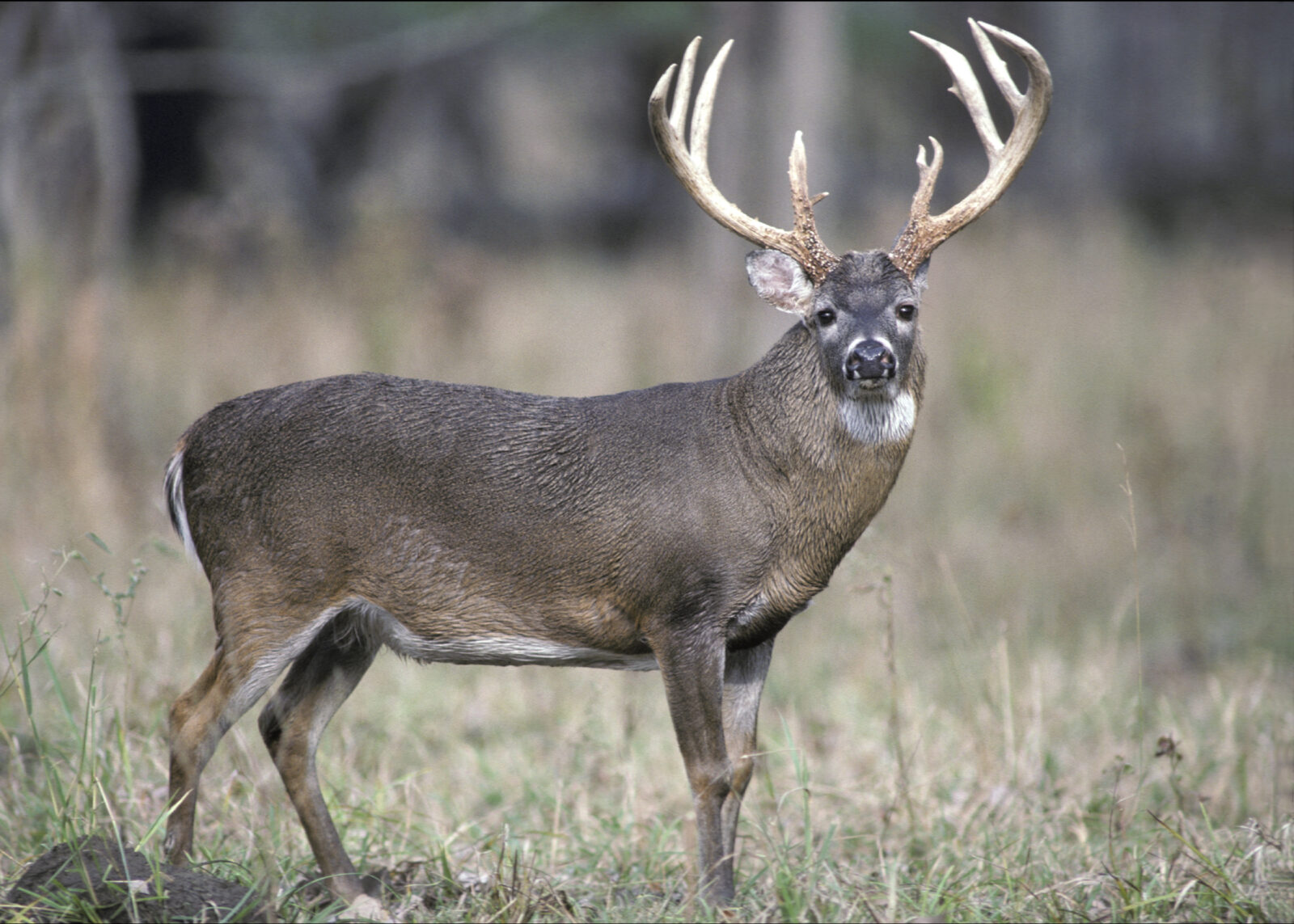
A taxidermist I know who sees a lot of volume swears that the biggest bucks brought to him every year tend to come off cattle farms.
I tried to find any university studies on the impact of cattle on deer habitat but all of them seem to be focused on western rangelands. One study in west Texas found that the largest bucks on land with cattle weighed an average of 20 pounds more than on land without cattle.
The consensus of the studies is that as long as cross-fencing and rotational grazing is used without overgrazing, cattle are a net positive. The cattle serve as a constant habitat “disturbance” similar to bushhogging, mulching, or burning which prevents grasses, briars, forbs, and woody species from reaching maturity where nutrition and digestibility is low. They primarily eat low desirability grasses which opens the pastures to sunlight where native forbs can germinate, compete, and grow, and their constant trampling of thickets and light browsing on woody/forb species on edge habitat causes constant tender fresh growth which is far more nutritious and preferable by deer. Deer also benefit from the liming, fertilization, and cool season clovers that tend to be mixed with pasture grasses by ranchers.
I’d love to know the opinions of others on here who hunt cattle land, as well as people like Matt Brock who study habitat, and CNC who has exposure to a lot of land through tracking. Is cattle farm land in Alabama actually better habitat than the average larger tracts of woods most of us tend to associate with better hunting?
After switching to primarily hunting cattle land myself the last several years, I am starting to think yes, as long as there is enough cover/bedding remaining in the creek bottoms, there is modern rotational grazing, and the cows aren’t overstocked.
|
|
|
|
|
Joined: Jun 2012
Posts: 29,071 Likes: 83
Dances With Weeds
|
|
Dances With Weeds
Joined: Jun 2012
Posts: 29,071 Likes: 83 |
There’s very little of it if any being managed the way you’re talking about with rotational grazing around here or at least I havent seen it....Cattle farms in the black belt see better bucks being killed right now simply because they are located in the black belt soil area where they’re exposed to vegetation growing on the properties around the cattle pastures……I'm sure there are some exceptions…….The biggest bodied deer I’ve ever recovered came from a cattle farm between Brundidge and Jack, AL where the farmer had several hundred acres of hay fields sowed in clover……Most cattle farms are just grazed down fields of grass…..but they often do tend to be in the higher productive soil areas and likely why the taxidermist sees better deer coming from those areas
Last edited by CNC; Yesterday at 07:01 PM.
Folks that know don't shoot old does........ 
|
|
|
|
|
Joined: Jun 2012
Posts: 29,071 Likes: 83
Dances With Weeds
|
|
Dances With Weeds
Joined: Jun 2012
Posts: 29,071 Likes: 83 |
Folks that know don't shoot old does........
|
|
|
|
|
Joined: Nov 2018
Posts: 2,416 Likes: 26
10 point
|
|
10 point
Joined: Nov 2018
Posts: 2,416 Likes: 26 |
I’m guessing CNC makes half the post on this thread. But in all seriousness, hunting is still great in the soil where pines don’t grow. In other words, high PH but not chalk. I regret selling my Faunsdale property. It’ll grow the heck out of Clover, cattle and deer with a small amount of fertilizer.
Last edited by JohnG; Yesterday at 07:24 PM.
|
|
|
|
|
Joined: Feb 2005
Posts: 4,218 Likes: 7
10 point
|
|
10 point
Joined: Feb 2005
Posts: 4,218 Likes: 7 |
In my opinion the perfect storm is to have a mixture of row crop (beans and corn) and cattle farms. I have zero facts to back this up, other than a few deer that I killed over the years. I have killed 4 bucks from a similar setup. I didn't weigh one and the others were 207, 208 and 210 lbs on the hoof. In the same vicinity minus the row crops, I would guess they would average 190 lbs. Cameras appear to back it up with the deer that I have not seen in person, but that's pure speculation.
|
|
|
|
|
Joined: Nov 2013
Posts: 760 Likes: 5
4 point
|
|
4 point
Joined: Nov 2013
Posts: 760 Likes: 5 |
CNC, you would be surprised how much is being cross fenced into smaller blocks of 20-30 acres and rotationally grazed with cows moving every week or less. The universities have been heavily pushing rotational grazing the last 15 years or so and serious ranchers are implementing it.
Where I hunt, from a distance all you would see is bahia grass. But look closely and it is full of native forbs mixed in with fresh young blackberry on the field edges, and clovers mixed into the pastures during fall/winter/spring.
The cows have access to the timber and swamps which clears the understory and allows more sunlight to penetrate. The woods are a little more open than I would prefer for ideal bedding habitat, but the more palatable ground level vegetation and hunting access is a plus.
There’s one section of a 30 acre pine clearcut that was sprayed and then replanted. The first two years it was completely taken over by dog fennel that shaded out everything else. Then a small herd of cows was rotated on it when the trees got about 5ft high and they have stomped down about 75% of the dog fennel. Quality forbs are now everywhere.
|
|
|
|
|
Joined: Feb 2016
Posts: 10,972 Likes: 190
Fancy
|
|
Fancy
Joined: Feb 2016
Posts: 10,972 Likes: 190 |
Rotational grazing in the western states works very well at maintaining the type of understory/plant diversity many game species thrive in.
It will work in the southeast too. I’ve never seen a correlation between cattle and deer body weights. Deer weigh more where they have an abundance of resources and age. Do deer weigh more in the areas he’s checked due to more fertile ground(hence the pasture/cattle/ag), or perhaps the deer are killed on larger cattle ranges where hunters control more of what gets killed? Lot of factors to consider other than cows equal bigger deer. The highest body weights we record, on average, come from areas either very active understory management, regardless of soil type. You can grow very large bodied deer in the south in upland, sandy loams and shallow soils with the right herbaceous management and age.
|
|
|
|
|
Joined: Nov 2013
Posts: 760 Likes: 5
4 point
|
|
4 point
Joined: Nov 2013
Posts: 760 Likes: 5 |
Rotational grazing in the western states works very well at maintaining the type of understory/plant diversity many game species thrive in.
It will work in the southeast too. I’ve never seen a correlation between cattle and deer body weights. Deer weigh more where they have an abundance of resources and age. Do deer weigh more in the areas he’s checked due to more fertile ground(hence the pasture/cattle/ag), or perhaps the deer are killed on larger cattle ranges where hunters control more of what gets killed? Lot of factors to consider other than cows equal bigger deer. The highest body weights we record, on average, come from areas either very active understory management, regardless of soil type. You can grow very large bodied deer in the south in upland, sandy loams and shallow soils with the right herbaceous management and age. Thanks Matt. This is on sandy loam soil in SE Alabama. 50/50 mix of pastures and swampy woods. I’m sure there’s ways in a perfect world where the land could be improved more without the cows than with them, but it would take a lot of money to replicate or exceed what a working cattle operation already provides. I think of it like getting 75% of the max habitat it could be with cows vs the average unmanaged Alabama timber property operating at probably 25% of its habitat potential.
|
|
|
|
|
Joined: Jun 2012
Posts: 29,071 Likes: 83
Dances With Weeds
|
|
Dances With Weeds
Joined: Jun 2012
Posts: 29,071 Likes: 83 |
CNC, you would be surprised how much is being cross fenced into smaller blocks of 20-30 acres and rotationally grazed with cows moving every week or less. The universities have been heavily pushing rotational grazing the last 15 years or so and serious ranchers are implementing it. That’s awesome…..Hopefully it will continue to catch on as more folks start implementing those practices……Maybe the Ag guys need to ease over to the Wildlife Biology building and let them guys know about it who are trying to fix the turkey problem  As far as weights go……I didn’t see that deer in the pic put on the scales but I recovered another one around that same time that I did see weighed that went 247 and the deer in the pic seemed bigger than that one……When it comes to soil, better quality plants grow in higher abundance on soil that is closer to neutral in pH with a clay or loam base that has high nutrient and water holding capacity as compared to sandy soil with a 5.0 pH or less that dries out quickly and has a low CEC……That has a lot to do with why the better soil areas produce better deer…..Cattle farms typically exist on soils with good forage production potential
Last edited by CNC; Yesterday at 09:28 PM.
Folks that know don't shoot old does........
|
|
|
|
|
Joined: Apr 2013
Posts: 2,609 Likes: 9
10 point
|
|
10 point
Joined: Apr 2013
Posts: 2,609 Likes: 9 |
Aside from what has been covered regarding habitat and browse quality, I wonder if deer in proximity to cattle do not benefit from crossover of gut bacteria. Both are ruminants. A quick google says cattle are more effective at digesting grasses and cellulose.
I remember a situation from Australia where the camels, once considered a pest on the western cattle lands, were found to actually benefit the cattle two ways. First, the camels ate weeds that competed with the grasses. Secondly, the cattle that shared water sources with camels were fatter than those which did not. This was due to the introduction of camel gut bacteria’s which more effectively broke down their forage.
|
|
|
|
|
Joined: Oct 2009
Posts: 1,768 Likes: 1
8 point
|
|
8 point
Joined: Oct 2009
Posts: 1,768 Likes: 1 |
What do cattle farms do with low Soil PH on Large acreages
|
|
|
|
|









![[Linked Image from i.imgur.com]](https://i.imgur.com/pbYIQbK.jpeg)

